
Bridging the “Vision” Gap
Transforming a Fortune 100 Bank’s cross-functional collaboration
We led the transformation of cross-functional collaboration at a Fortune 100 Bank through devising, developing, and implementing a bespoke 360º Teams Framework. By addressing fragmented workflows and a lack of shared vision, this Service Design initiative established a scalable model for organizational efficiency.
A “RADICAL TRANSPARENCY” INITIATIVE
At the start of the project, interviews revealed that while individual teams were deeply engaged in work related to an effort termed Next Best Action (NBA), many could not articulate the overarching vision or how their specific tasks contributed to it.
To address this Service Design challenge, we developed a framework to dismantle these silos, creating radical transparency and a unified "One Team" approach.
Inventing & Implementing 360º Teams
-
The Challenge: Fragmented Architecture & Siloed Efforts
The existing MarTech architecture was aging and disconnected across channels. Key friction points included:
Lack of Visibility: No easy way to learn about other teams' current or past projects.
Redundancy: Siloed workflows led to a risk of creating disjointed member experiences and duplicative efforts.
Vision Decay: Because the work had been ongoing for over two years, the "big picture" mission had become obscured.
-
The Solution: The 360º Teams Framework
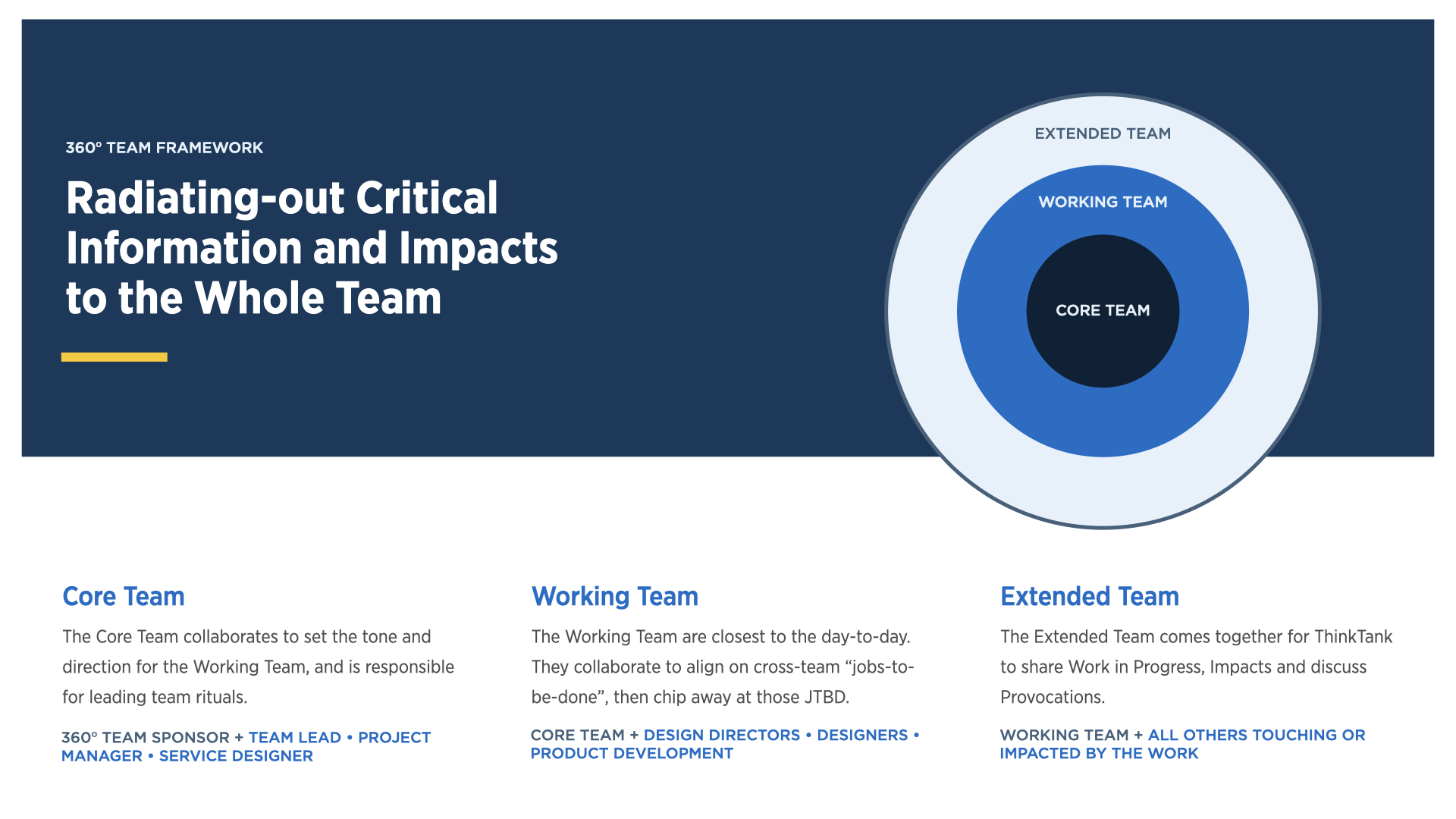
Designed a tiered collaboration model to "radiate" information from the day-to-day tactical level up to executive leadership. This included:
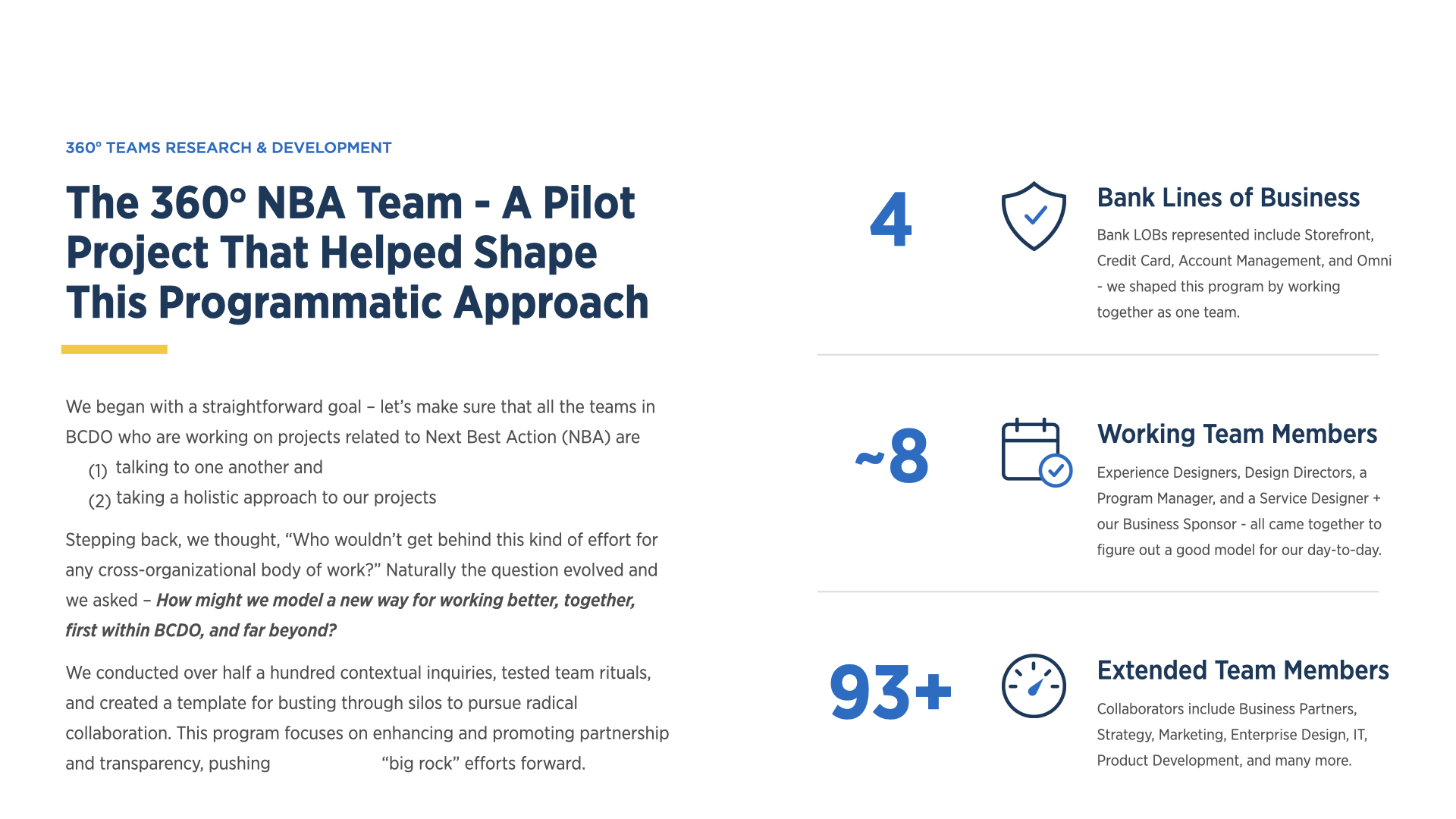
The Core Team - Sets tone, direction, and leads rituals. Comprised of: Service Designer, Project Manager, Team Lead, Sponsor
The Working Team - Closest to day-to-day; chips away at "Jobs to be Done". Comprised of: Designers, Design Directors, Business & Product, Digital, Development
The Extended Team - Provides "Think Tank" support and cross-functional alignment. Comprised of: Marketing, Strategy, Enterprise Design, Executive Leadership
-
The "360" Methods & Rituals
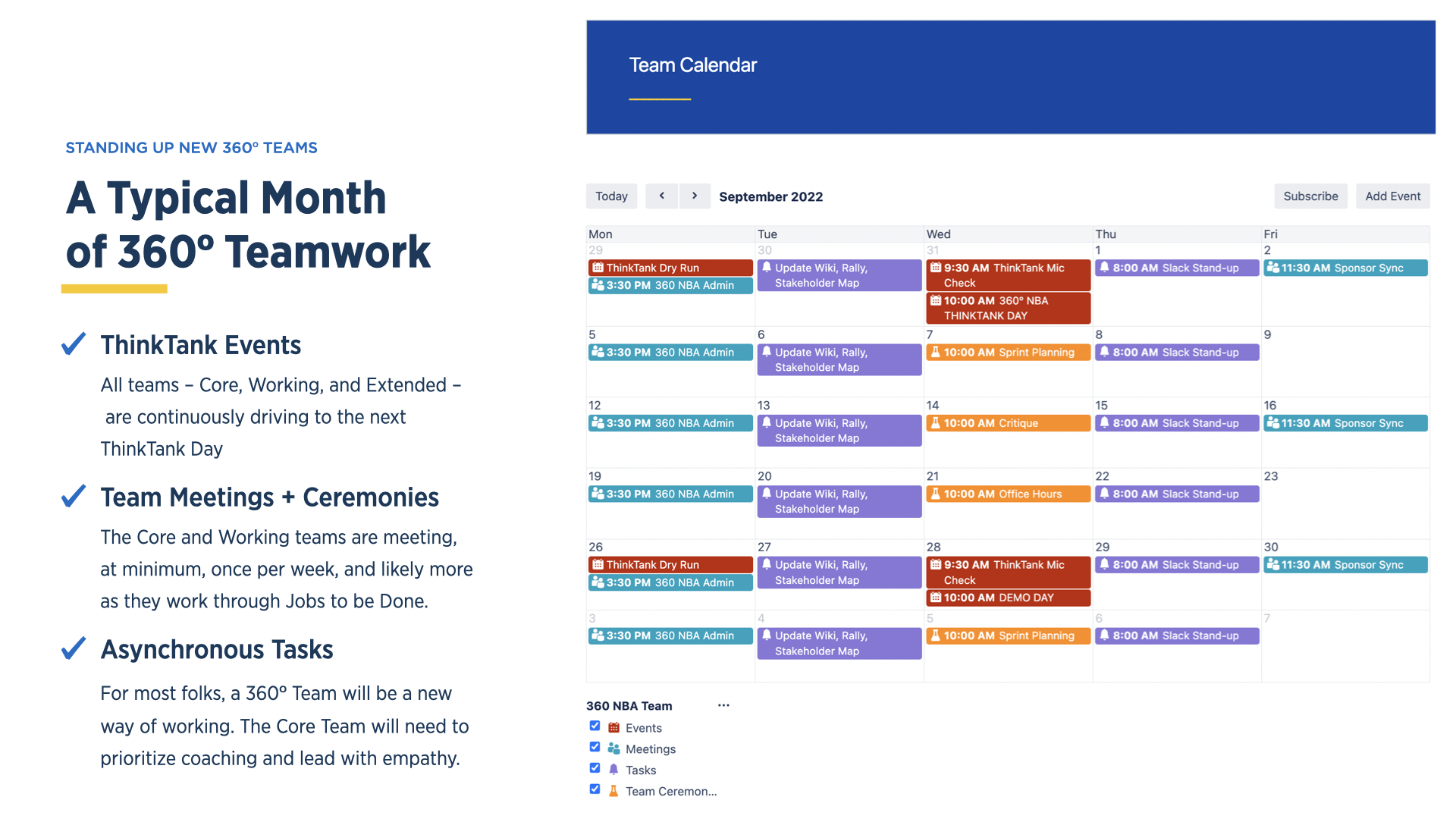
To reduce friction and ensure consistency, we implemented specific team norms:
Demo Days (Monthly): All-hands work-shares that provided executive leadership with first-hand exposure to WIP and special topics.
Think Tank (Every 4 Weeks): A forum for the Extended Team to discuss impacts and provocations.
Office Hours (Bi-weekly): Dedicated time for deep communication and feasibility touch-bases with Dev partners.
Work Critiques: Cross-LOB reviews to ensure visual and verbal consistency before moving to formal reviews.
-
The Service Design Process
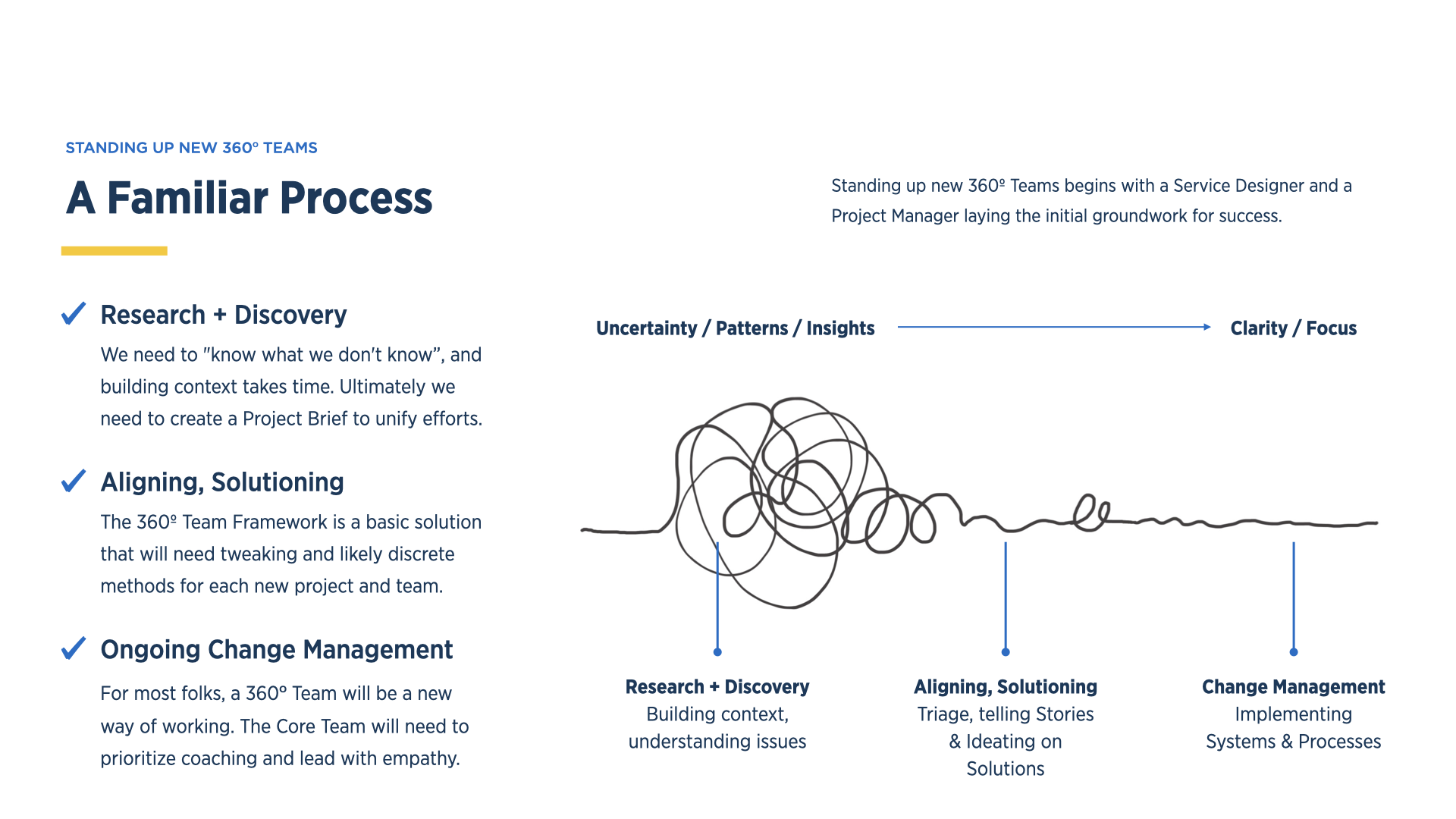
The service design role followed a structured timeline to move from discovery to a living governance model:
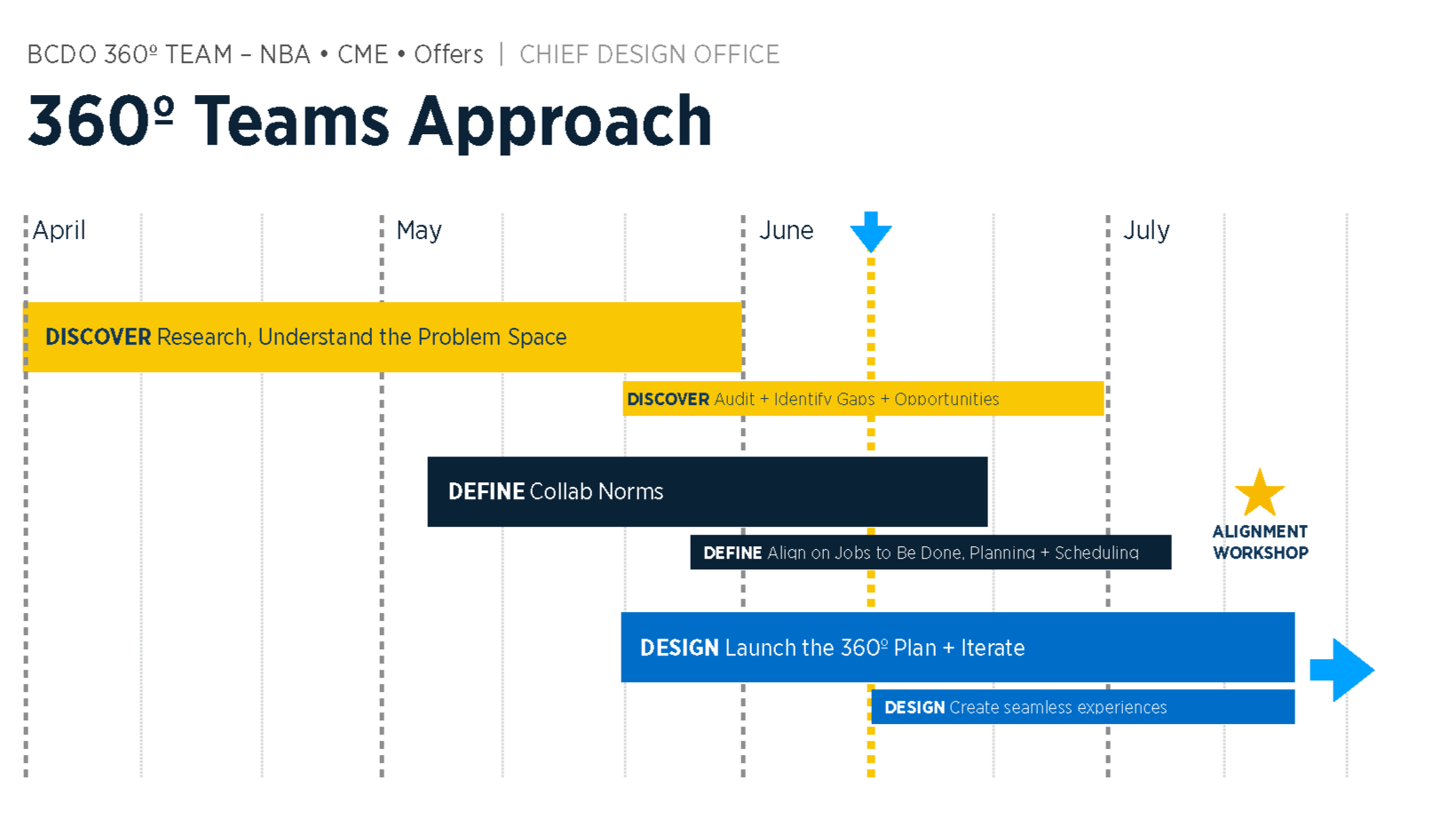
Discover (April-June): Conducted 50+ contextual inquiries to identify gaps and understand the problem.
Define (May-July): Established collaboration norms and aligned the team on shared "Jobs to be Done".
Design & Iterate (June-Ongoing): Launched the 360º Teams plan, creating a centralized Team Wiki for research and project tracking.
Govern: Established a Governance Team to evaluate change requests twice per year during PI planning to keep the program relevant.
-
Impact: Operational Efficiency & Cohesion
The implementation of this framework achieved several key organizational results:
Radical Transparency: Centralized Stakeholder Maps and Wikis ensured everyone knew who to reach out to and where to find data.
Seamless Member Experiences: By integrating advice, service, and offers across an omnichannel delivery system (PEGA), we moved toward a more personalized member journey.
Scalable Model: Created a "Project Kit" of reusable templates (Mural, Rally, Wiki) to allow other LOBs to replicate the 360º Teams approach.